New Lot Restock — Fall batch now in stock · Shipping worldwide ·

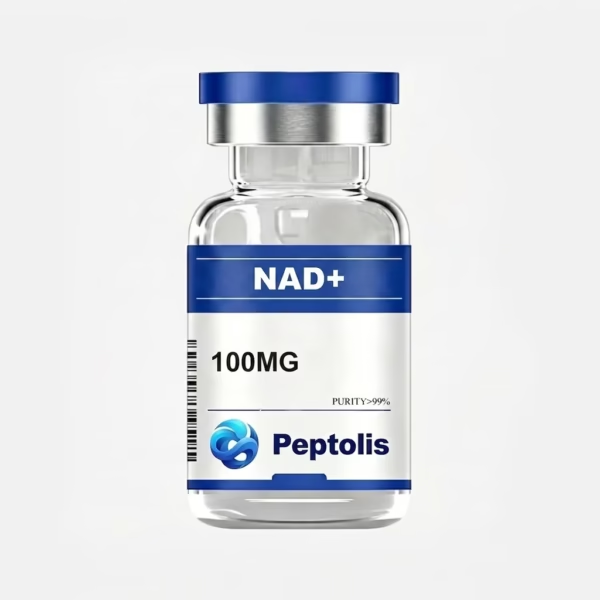
NAD+
$36.00
NAD+ (nicotinamide adenine dinucleotide, oxidized form) is a pyridine nucleotide coenzyme present in every living cell. Structurally, NAD+ consists of two nucleotides — one containing adenine, the other nicotinamide — joined by a pair of phosphate groups.
What is NAD+?
NAD+ (nicotinamide adenine dinucleotide, oxidized form) is a pyridine nucleotide coenzyme present in every living cell. Structurally, NAD+ consists of two nucleotides — one containing adenine, the other nicotinamide — joined by a pair of phosphate groups. It exists in two redox states (NAD+ and NADH) and is central to cellular electron-transfer chemistry. Molecular formula C21H27N7O14P2, molecular weight 663.43 g/mol.
Mechanism of Action (Research Framing)
NAD+ serves as the obligate electron acceptor for a large class of enzymes (oxidoreductases) and as the substrate for several NAD+-consuming enzyme families:
- Sirtuins (SIRT1 through SIRT7) — NAD+-dependent deacylases studied in cellular metabolism, chromatin biology, and mitochondrial function research
- PARP family (PARP1, PARP2) — NAD+-consuming poly-ADP-ribose polymerases involved in the DNA damage response
- CD38 — a NAD+ glycohydrolase that has emerged as a major NAD+ consumer in research literature on age-related cellular metabolism
- SARM1 — a NAD+ cleaving enzyme studied in axon-degeneration research
Research investigations of NAD+ in cultured cells typically focus on cellular NAD+/NADH ratio measurements, sirtuin activity assays, and mitochondrial respiration measurements via Seahorse-style extracellular flux methodology. Cellular NAD+ concentrations decline measurably with age in published animal studies, which has driven a substantial body of research literature investigating NAD+ precursor compounds (nicotinamide mononucleotide, nicotinamide riboside) in research models. Researchers selecting NAD+ for in-vitro work should consult target methodology carefully — NAD+ in solution has stability characteristics distinct from those of common precursor compounds.
Standard Research Assays
Published NAD+ research commonly employs:
- Cyclic enzymatic assays for NAD+/NADH ratio measurement in cell extracts
- HPLC quantification of NAD+ and its metabolites in tissue lysates
- Sirtuin activity assays using fluorescent peptide substrates
- Seahorse XF extracellular flux analysis for mitochondrial respiration
- qPCR analysis of NAD+-pathway gene expression (NAMPT, NMNAT1-3, NRK1-2)
- Western blot for SIRT1, SIRT3, and other sirtuin family members
- Mass spectrometry-based metabolomics for NAD+ flux measurements
- Bioluminescence assays using NAD+-dependent luciferase reporters
- NMR spectroscopy for direct quantification of NAD+ in tissue extracts
- Flow cytometry analysis of NAD+-dependent enzyme activity with fluorescent substrates
- CRISPR-based functional screens for NAD+ biosynthesis pathway components
- Stable-isotope-tracer flux analysis for NAD+ metabolism research
- Computational network analysis of NAD+-dependent enzyme expression
- Real-time NAD+/NADH ratio measurement with genetically-encoded fluorescent biosensors
- Multi-omic integration of NAD+ metabolomics with transcriptomic and proteomic datasets
The mitochondrial subcellular pool of NAD+ has distinct kinetic and concentration characteristics from the cytosolic and nuclear pools, and researchers using compartment-resolved methodology should consult specialized literature on subcellular NAD+ measurement before assay design. Tissue-specific NAD+ research methodology also varies significantly across hepatic, neuronal, and skeletal-muscle preparations, with each requiring distinct extraction and quantification protocols documented in the published literature.
Storage & Handling
- Store sealed, dry, and protected from light.
- Long-term storage: -20°C recommended.
- Short-term storage: 2-8°C acceptable.
- Reconstitution: Use sterile technique with bacteriostatic water.
- Post-reconstitution: Stable up to 30 days at 2-8°C.
All handling instructions are intended for laboratory use only.
Reviews
There are no reviews yet.