Verification

How We Test Every Lot We Sell

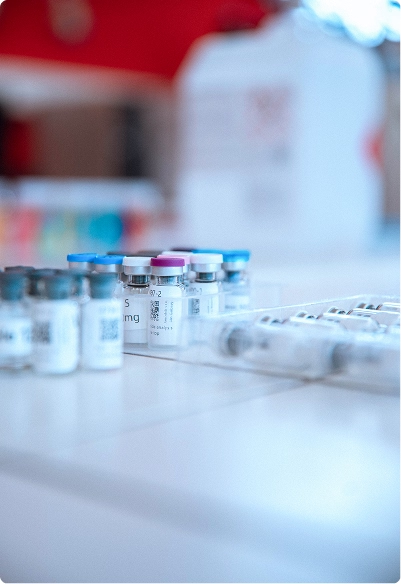
Before any compound reaches our shelf, it’s tested by an independent third-party lab — not us, not our manufacturing partner. Every lot gets its own certificate of analysis (COA), documenting purity, identity, and the exact method used to confirm both. Below is exactly how that process works, what’s on the certificate, and where to find the report for the lot in your hands.

Two Questions, Two Tests

A compound can be answer to only one of these questions — which is why we run both.

HPLC Analysis — "How pure is it?"

High-performance liquid chromatography separates a sample into its individual components based on how each one behaves as it passes through the system. The result is a chromatogram that shows the target compound as a percentage of everything else detected in the sample — including any breakdown products or synthesis byproducts. This is where the purity percentage on your COA comes from.

Mass Spectrometry — "Is it actually this compound?"

HPLC tells you how clean a sample is, but not necessarily what it is. Mass spectrometry confirms molecular identity and weight, verifying that what's in the vial matches the compound listed on the label — not just something similar. A lot can score well on purity and still fail identity confirmation if it isn't the right molecule to begin with.

Heavy Metals Screening

Each lot is also screened for common heavy metal contaminants that can be introduced during synthesis. Results are included on the same certificate as the purity and identity findings.

Lot-Specific Documentation

Every batch is assigned its own lot number the moment it's synthesized. That number follows the batch through testing and onto the certificate, so the report you read is tied to the exact vial you're holding — not a representative sample from some earlier run.

Lot-Specific Beats Batch-Wide

It’s common practice in this industry to test a compound once and apply that result to every unit sold for months afterward — even as new production runs come through. The problem is simple: a result from March doesn’t tell you anything about what shipped in August. We test every lot individually. If a batch doesn’t meet our purity threshold, it doesn’t get listed, regardless of how earlier batches of the same compound performed. The lot number on your COA isn’t a reference to “this compound, generally” — it’s a reference to the specific production run in your vial.

Verified Reports

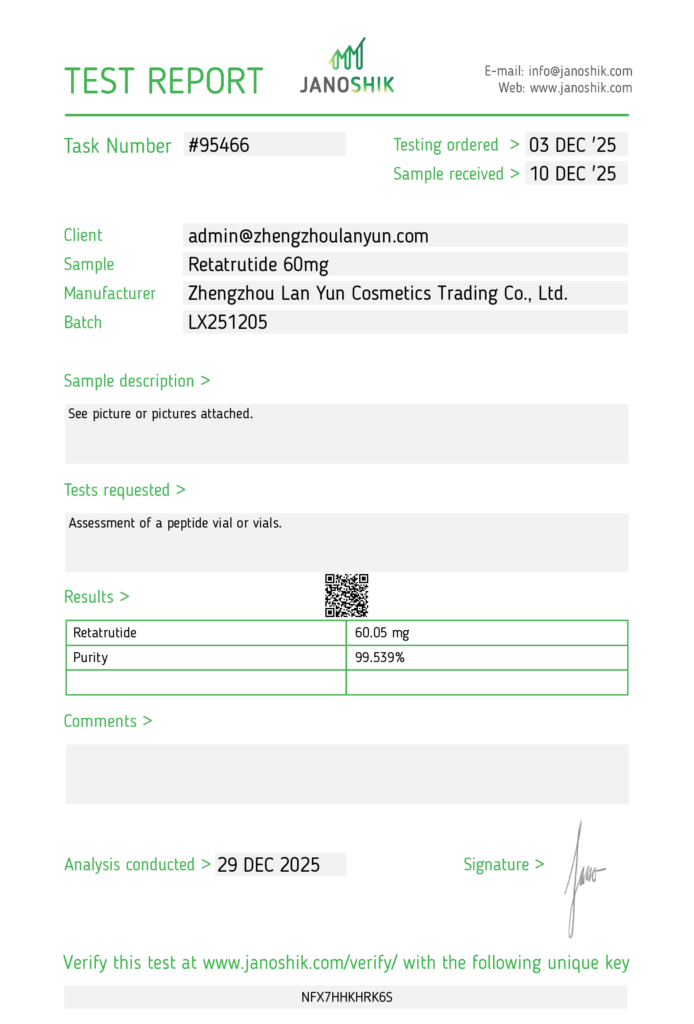
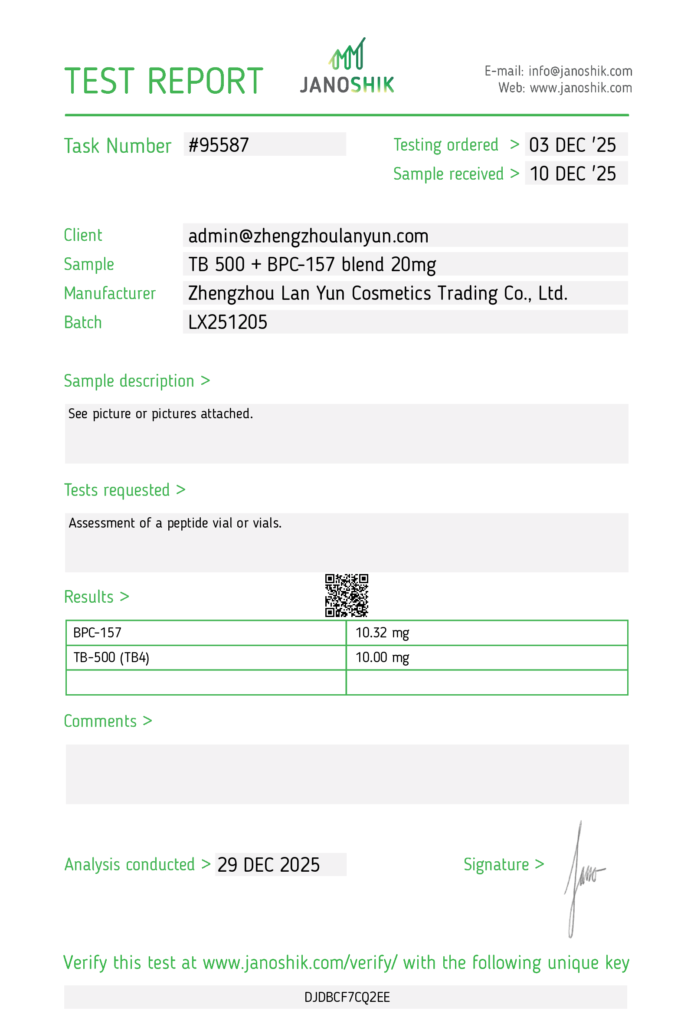
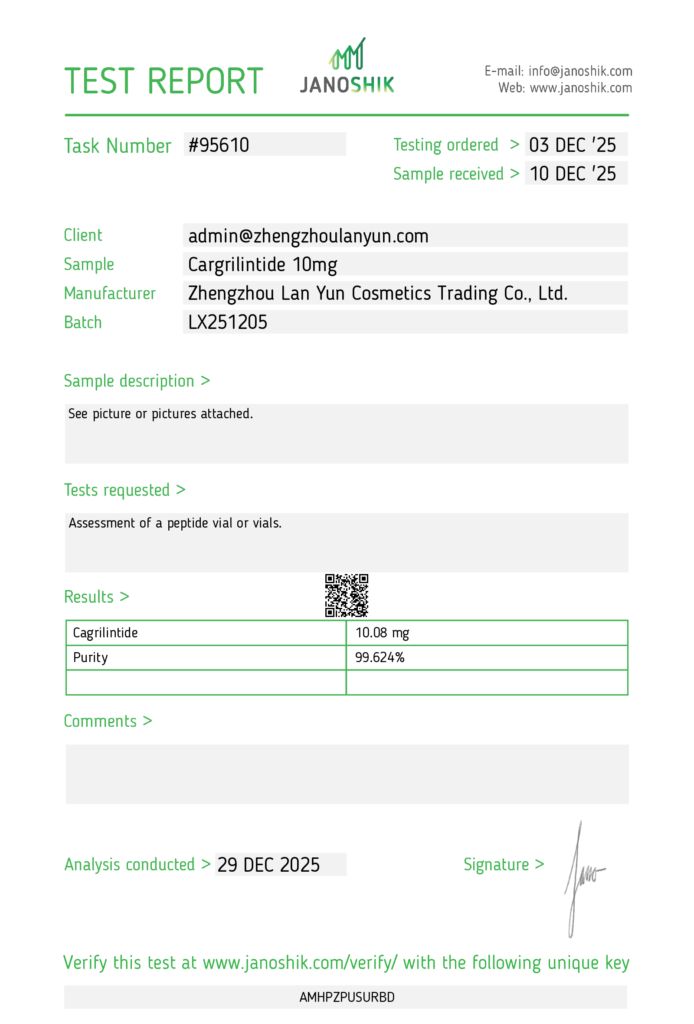
Below are certificates for our currently active lots. Each one links to the full report.

BPC10mg+TB10mg

BPC-157 + TB-500 Blend is a research-grade combination of two of the most widely studied tissue-repair research peptides in a single lyophilized vial.
Cagrilintide

Cagrilintide is a synthetic long-acting amylin receptor agonist supplied as a lyophilized powder for laboratory research.
GLOW70

GHK-Cu + BPC-157 + TB-500 Triple Blend is a research-grade combination lyophilized vial containing three widely-studied peptides with complementary research pathways in tissue repair and remodeling literature.
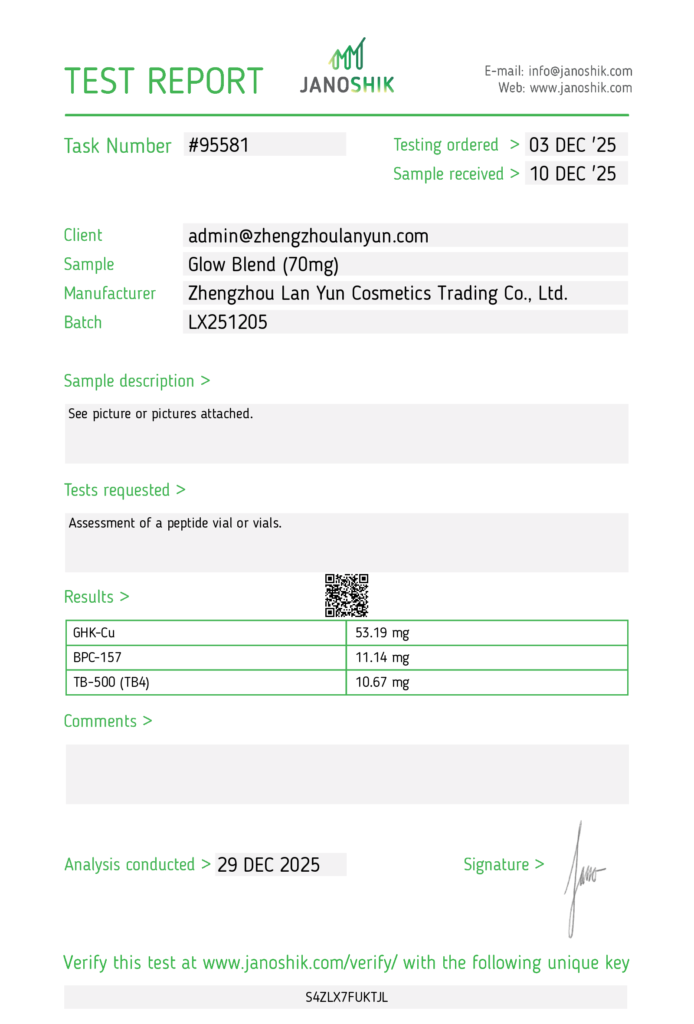
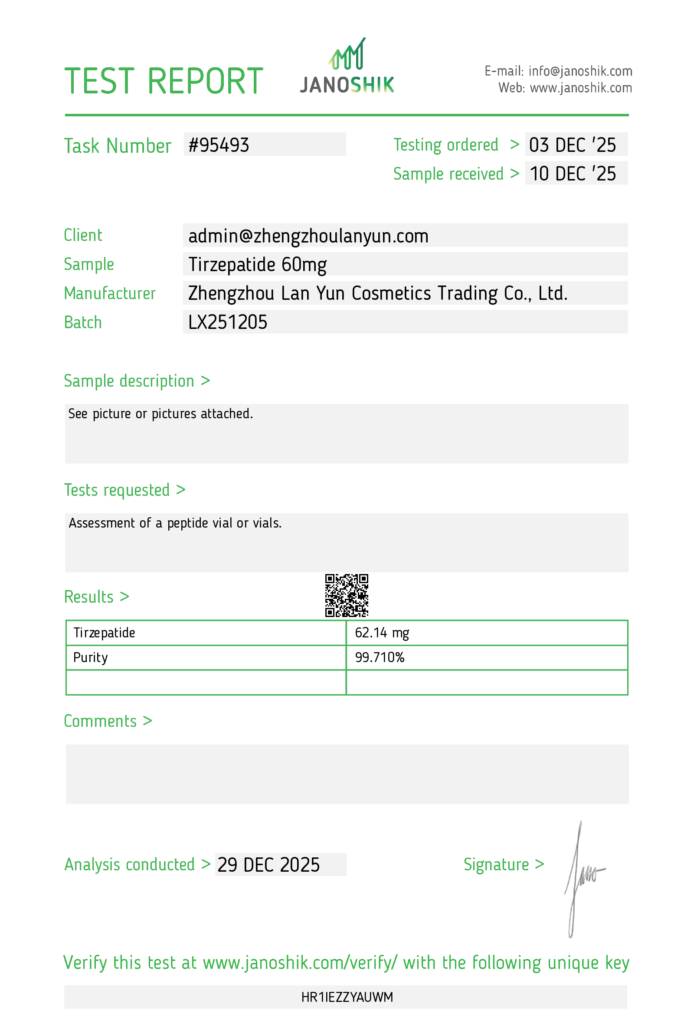
Tirzepatide

Tirzepatide (GLP-2T) is a synthetic dual GLP-1 and GIP receptor agonist supplied as a lyophilized powder for laboratory research.
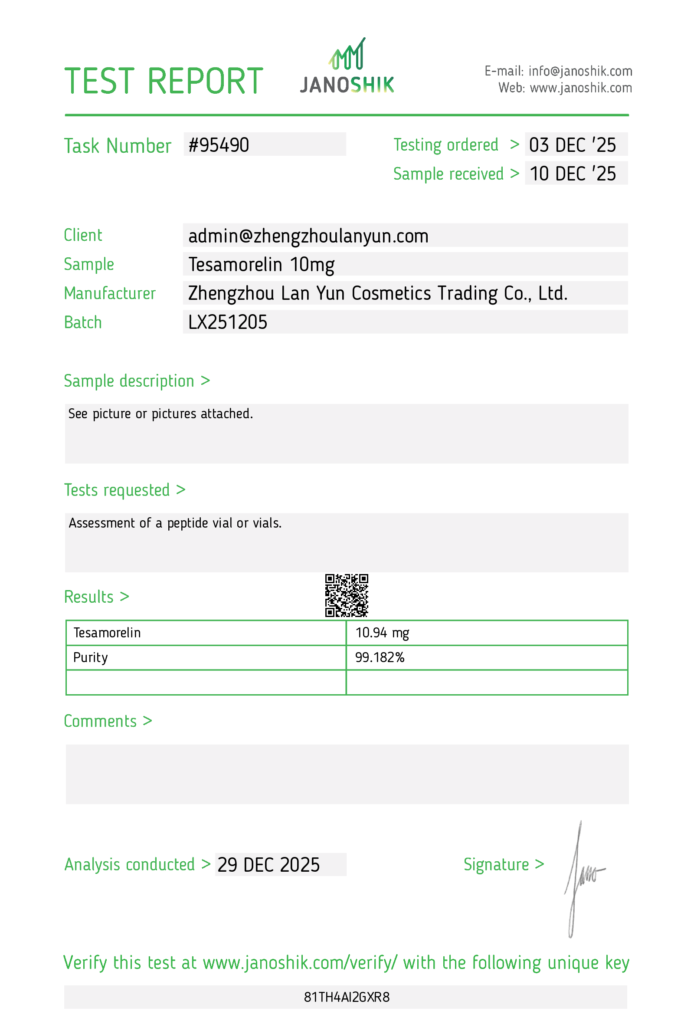
Tesamorelin

Tesamorelin is a synthetic analogue of growth hormone-releasing hormone (GHRH) with an N-terminal trans-3-hexenoyl modification that extends stability.
Retatrutide

Retatrutide (GLP-3R), also referenced as ION-3R, is a synthetic triple agonist targeting GLP-1, GIP, and glucagon receptors, supplied as a lyophilized powder for laboratory research.